Family as Support, Not Control:
How Indian Matchmaking Has Changed
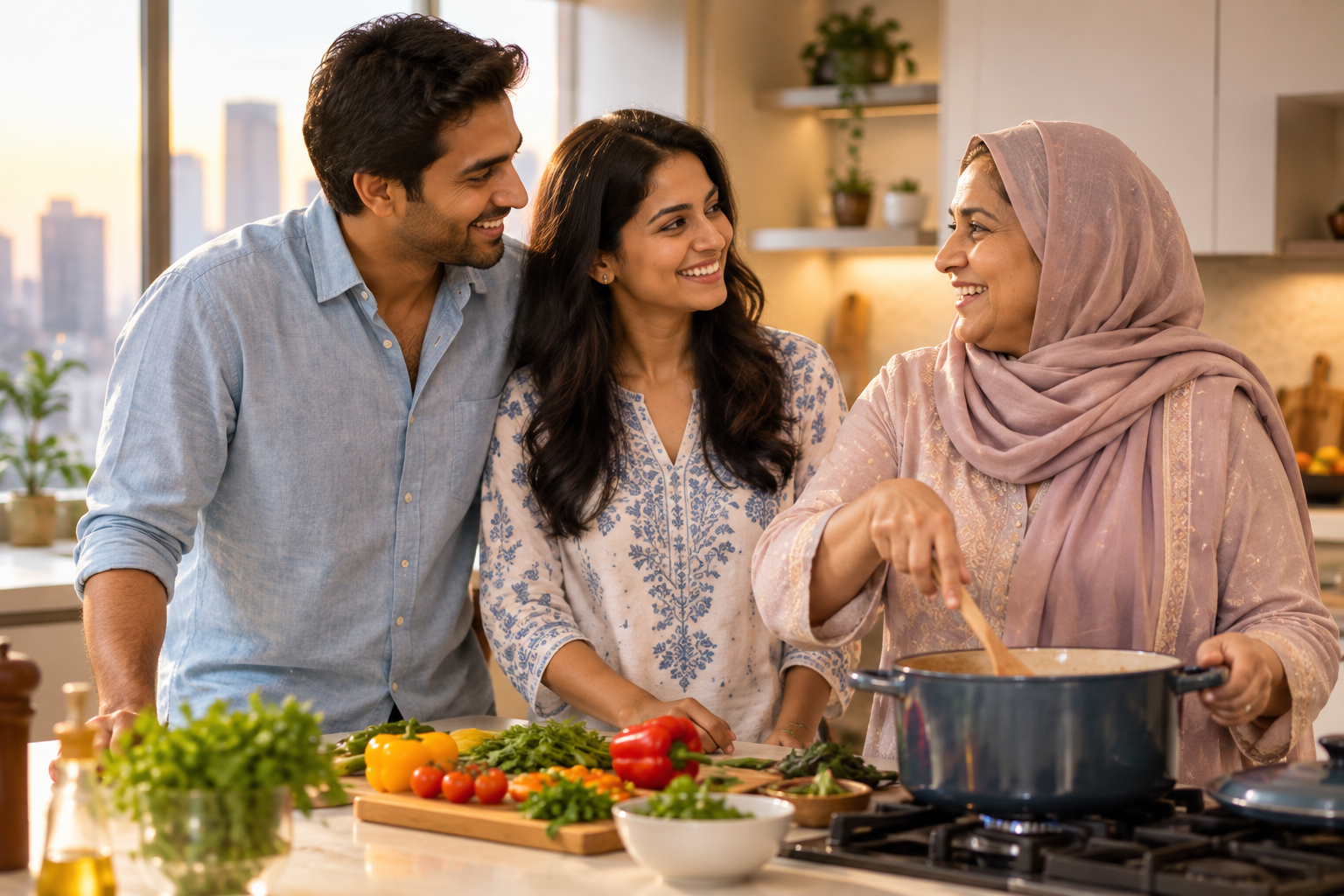
Indian families and South Asian families haven't stepped back from matchmaking. They've changed seats: from the decision-maker's chair to the advisor's.
Ask most people what an "arranged marriage" looks like and they picture parents choosing, and children agreeing. That picture is decades out of date. In the families we work with, the call to a matchmaker often comes from a parent. But the final yes or no belongs to their son or daughter, and parents increasingly want it that way.
This isn't a hunch. The data has been pointing here for years.
This generational evolution from parental control to parental support runs parallel to another massive trend: the broadening of cultural preferences. As the family role transitions into an advisory one, traditional requirements like strict caste and regional filters are expanding significantly. (For a full look at the data behind these changing trends, check out our analysis on Caste & Modern South Asian Matchmaking in USA).
What the data says about Modern Arranged Marriage
Singles are driving the search, and most still want their parents in it.
| Finding | Then | Now | Source |
|---|---|---|---|
| Profiles managed by the single themselves | 67% (2016) | 77% (2025) | Jeevansathi, via The Daily Pioneer |
| Profiles managed by family | 33% (2016) | 23% (2025) | Jeevansathi, via Storyboard18 |
| Say parental involvement makes the search easier | — | 69% overall, 75% of women (2026) | Jeevansathi, via Storyboard18 |
| Finding matches entirely on their own, no parents | — | 32% (2026) | ThePrint |
Jeevansathi's 2026 report, drawn from over 30,000 active users, calls this a "Modern Indian Middle Path": family involvement moving from control to support. In smaller Tier 3 cities, siblings are now more involved than parents, acting as the bridge between traditional families and online matchmaking.
Academic research saw this coming. A University of Maryland study found younger Indian women were more likely to report a parent-arranged marriage with their consent, and concluded that this model may be the best way to honour individual choice while keeping families involved (DRUM, UMD). Analysis of the India Human Development Survey found that among mothers studied, 56% had a parent-arranged marriage with some choice, versus 39% with none (Banerji & Deshpande, Asian Population Studies). Women whose marriages involved their own choice also report more say in household decisions later on.
Modern Indian Matchmaking: Parents Shortlist, Children Decide
In our own practice, the pattern is consistent. Parents start the conversation, then hand over the decision.
- Parents make first contact. They reach out to the matchmaker, share the family's background and values, and often explain what their child is like better than a profile ever could.
- Parents act as the first filter. They review prospective brides or grooms for the things families notice: values, upbringing, community, how the other family carries itself.
- The shortlist goes to the son or daughter. Only profiles that pass the family's lens reach them, which saves time and emotional energy.
- The single decides. Who to meet, how long to talk, and whether to say yes rests with them.
- Families meet once there's mutual interest. The parents return as supporters and hosts, not judges.
This isn't new to our communities. Back in 2007, Bay Area Indian families were already describing a similar rhythm: relatives find a handful of prospects, then the children make the final choice (Hinduism Today). What's changed is that it's now the norm, not the exception.
Why the middle path works
It combines what each generation does best.
- Parents bring perspective. They've seen marriages succeed and struggle, and they notice family dynamics a 29-year-old might overlook.
- Children bring self-knowledge. Only they know who they click with, what they need day to day, and what kind of partnership they want.
- It cuts noise. Many singles are worn out by dating apps. Tinder's paying users dropped 8% year over year in early 2026 (The Established). A family-screened shortlist is the opposite of endless swiping.
- It protects the relationship that matters most after the wedding. When parents helped choose the shortlist, they arrive at the wedding as allies of the couple.
For families abroad, the gap can be wider. A daughter raised in California and parents who grew up in Pune may define "a good match" differently. The support model gives both a role without forcing either to give in. That's why we meet both the client and their family, and work across the gap rather than quietly picking a side.
Making it work in your family
For parents
- Ask your child what matters to them before you start shortlisting, and filter for their list as well as yours.
- Share why you passed on a profile, not just that you did.
- Once a match reaches your child, step back. Offer your view when asked.
For singles
- Tell your parents your non-negotiables early, so their shortlist reflects you.
- Treat their screening as a head start, not a mandate.
- Keep them in the loop. Families support decisions they feel part of.
How Kask works with families
At Kask, the family is a client too, but your preferences always lead. We meet you and your parents, understand the values and community details that matter, and bring one right match, not twenty maybes. Parents get a trusted partner in the search. You keep the final say.
Thinking about starting the conversation? Book a free 20-minute consultation, whether you're the parent or the one getting married.
Sources
- Storyboard18: Jeevansathi "The Big Shift" report
- The Daily Pioneer: A new decade of Indian marriages
- ThePrint: Jeevansathi Modern Matchmaking Report 2026
- UMD: Education and autonomy in partner choice in India
- Banerji & Deshpande: Marriage choice and decision-making power in India
- Hinduism Today: Marriage arranging in the Indian diaspora
- The Established: Arranged marriage and modern matchmaking